
Applications
Remote monitoring and dimming for public lighting, tunnels and large industrial buildings.
Public lighting: roads, squares and paths
A map links each luminaire to the street segment or area it serves. Operators can group lights by district, road or route, set different schedules and check the outcome of remote commands. Diagnostics and energy history help identify whether an issue affects a single luminaire or a group and plan maintenance.
Tunnels: lighting by zone
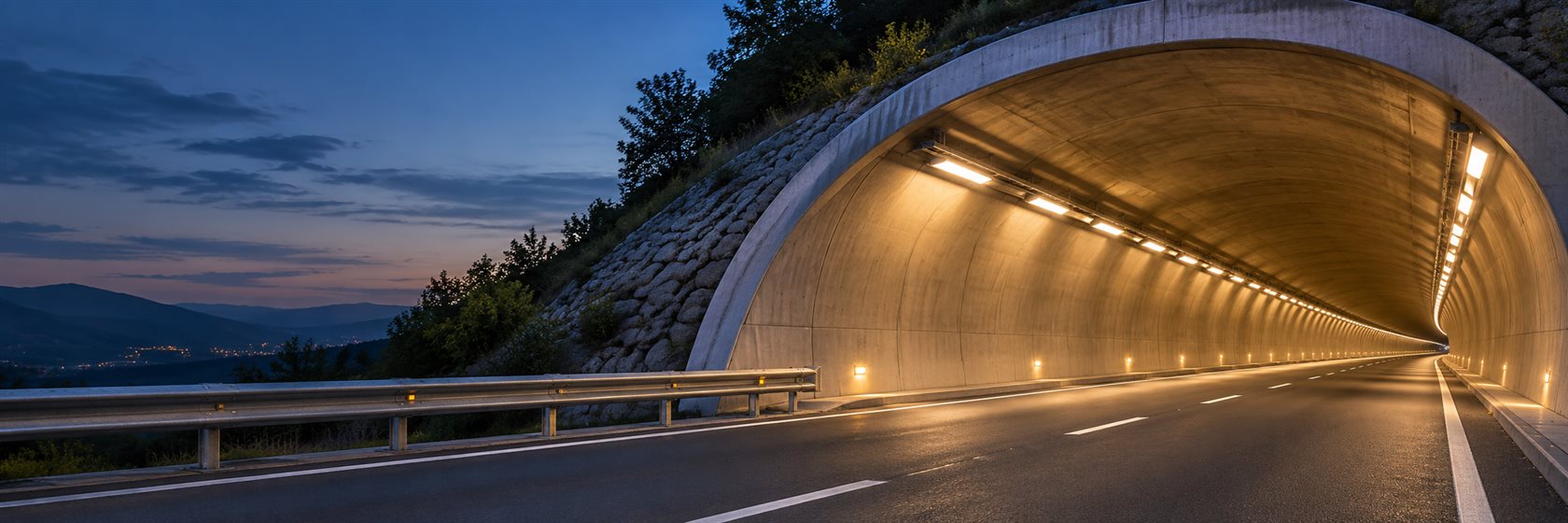
Lighting can be organised into entrance, transition, interior and exit zones according to the lighting design. Onboard electronics dim individual luminaires, while the local control unit coordinates groups, reads status and gathers alarms. Where specified, outdoor luminance readings and schedules can inform dimming profiles. Minimum levels and emergency scenarios must be defined and checked during design and commissioning.
Large industrial buildings: lighting by area and schedule
Aisles, loading bays, storage and production areas can use separate groups and schedules. Where fitted, occupancy or light sensors can adjust levels to how the space is used and how much daylight is available. The indoor map helps locate faults and group data makes it easier to compare energy use across areas.
Integration and commissioning
The local unit can exchange status, readings and commands with supervisory systems or compatible devices. Commissioning includes logging luminaires, configuring groups, schedules and thresholds, and testing commands, diagnostics and alarms on site. Integrations such as meters, UPS units and sensors depend on the installation configuration.